

Is the Pink Tax Real? What Girls Learn About Worth Before They’re 18
If you’ve ever stood in a store aisle and noticed that the pink version costs more, you’re not imagining it.
Yes — the pink tax is real.
But the more important question isn’t whether it exists.
It’s what girls learn from it long before they have language for inequity, economics, or power.
Because the pink tax isn’t just about money.
It’s about messaging.
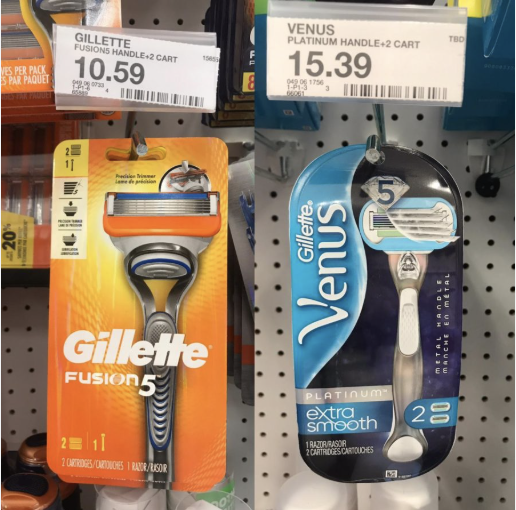
Yes, the Pink Tax Is Real — and It Shows Up Early
The term pink tax refers to the practice of charging more for products and services marketed toward women and girls — even when they are functionally identical to those marketed toward men.
Common examples include:
personal care items
clothing
school supplies
athletic gear
haircuts and services
Multiple studies have shown that items marketed to women often cost more, last shorter, or require replacement more frequently.
But girls don’t experience this as “consumer inequity.”
They experience it as normal. More on the Pink Tax in Other Posts, The Cost of the Pink Tax
What Girls Internalize Before Anyone Explains It
Girls learn the lesson quietly:
My needs cost more.
Fairness isn’t automatic.
I should be grateful for access, even if it’s unequal.
Long before girls are taught about advocacy, budgeting, or gender equity, they learn to absorb the difference.
They learn to work around it.
They learn not to make a fuss.
They learn that asking for more requires justification.
Those lessons don’t stay in the checkout line.
How the Pink Tax Shows Up in Sports and School
In athletics and school spaces, the pink tax often looks less like a price tag and more like a pattern.
Girls’ teams receiving fewer resources
Uniforms designed for appearance, not performance
Equipment that doesn’t fit bodies properly
Facilities that lag behind “because that’s how it’s always been”
Expectations to perform at the same level with fewer supports
And when inequities are raised, girls are often told — explicitly or implicitly — to be thankful they’re included at all.
This is where cost becomes culture.
And culture teaches girls what they’re worth.
Belonging vs. Budget Lines
Belonging isn’t about equal line items on a spreadsheet.
But budget decisions communicate values — whether we intend them to or not.
When girls consistently experience underinvestment, they don’t just notice what’s missing. They internalize what it means.
They learn:
who gets prioritized
whose discomfort is tolerated
whose excellence is assumed
Belonging erodes not because girls lack resilience — but because inequity becomes normalized.
What Adults and Leaders Can Do Differently
We don’t fix the pink tax with one policy or purchase.
We fix it by naming patterns and interrupting assumptions.
That starts with:
noticing where inequities hide in plain sight
asking why certain gaps are accepted as inevitable
advocating publicly, not quietly
refusing to frame fairness as a favor
And perhaps most importantly, it means modeling for girls that their needs are not an inconvenience.
Because when adults normalize equity, girls stop having to earn it.
Why This Matters for Leadership and Belonging
Girls don’t leave sports, leadership, or ambition because they’re weak.
They leave when the cost — emotional, physical, financial — keeps rising without acknowledgment.
When belonging feels conditional.
When worth feels negotiable.
When they’re expected to endure instead of belong.
If we want girls to stay, to lead, and to thrive, we have to pay attention to the messages they’re absorbing — especially the quiet ones.
The pink tax is one of them.
The Question We Should Be Asking
Not “Is the pink tax real?”
But:
What are girls learning about their worth — and who is responsible for changing the lesson?
At The GRL Initiative, we believe belonging starts when adults are willing to notice, name, and change the systems that quietly teach girls to expect less.
Because girls don’t need thicker skin.
They need fair ground to stand on.
