

Should Kids Play Up? What Happens When Children Move to Older Teams
In youth sports, one of the most emotional decisions a parent faces is whether their child should “play up” on an older team. Sometimes it’s appropriate. Sometimes it works beautifully. But most of the time, the move does not support long-term confidence, belonging, or development.
Here’s what the research shows — and why the risks are bigger than most families realize.
1. Kids go from confident to confused — almost overnight.
On an age-appropriate team, kids experience mastery. They understand expectations and can predict the social and physical demands of the sport. According to the Aspen Institute’s Project Play, kids stay in sports when they feel competent and confident in their ability to improve.
When children are moved up too soon, that sense of competence disappears. They’re no longer one of the strongest or most capable players. They become the smallest, the slowest, or the least experienced — even if they were thriving just days before.
This isn’t just a performance issue. It’s an identity issue.
Research from JAMA Pediatrics shows that self-perceptions of competence are some of the strongest predictors of continued participation in youth sports. When competence drops suddenly, motivation drops with it.
2. They start surviving instead of developing.
Skill development depends on repetition, appropriate challenge, and targeted coaching.
The Developmental Model of Sport Participation (Côté, Baker & Abernethy) emphasizes that kids learn best when the demands of the environment match their current developmental stage.
But when kids play up, the gap between what they can do and what the older team requires is often too wide. Instead of experimenting, leading, or learning deeply, they spend their time trying not to fall behind. That “just keep up” mode is the opposite of development.
The CDC’s Youth Physical Activity Guidelines similarly note that children need age-matched instruction and pacing to learn motor skills effectively. Too much challenge too soon does not accelerate learning — it often interrupts it.
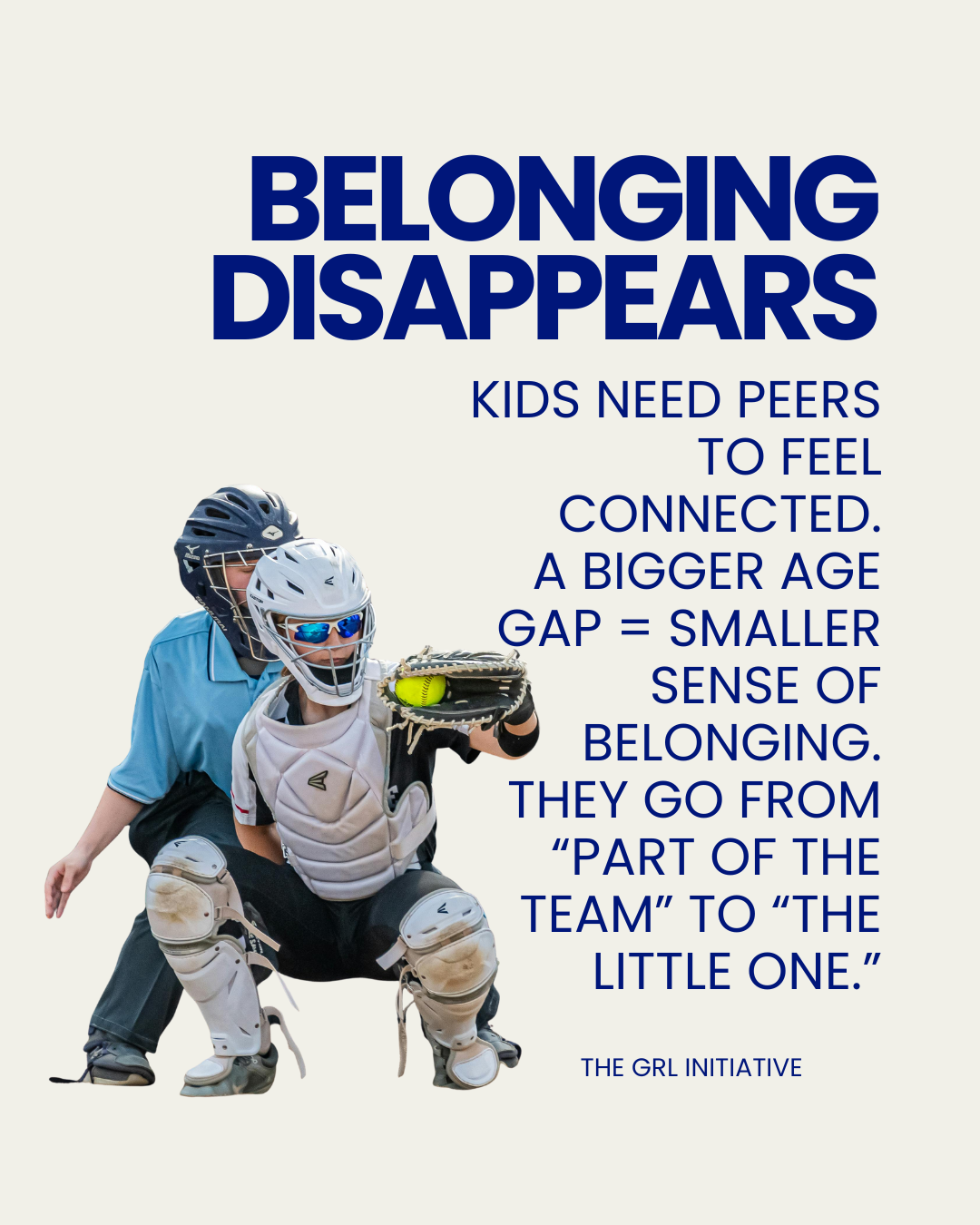
3. They lose belonging — fast.
Belonging is not a buzzword; it’s a sports retention metric.
The Research Consortium for Youth Sport & Health and the Women’s Sports Foundation consistently show that social connection is one of the strongest factors keeping kids in sports.
When a child is pulled up:
The age gap widens.
Social relationships shift.
Emotional safety decreases.
They often become “the little one” or the “extra player,” not a full peer.
And when belonging drops, enjoyment drops — and quitting becomes more likely.
The Aspen Institute’s State of Play 2022 report identifies “lack of belonging” as one of the top contributors to the youth-sport dropout rate.
Kids don’t stay because they’re good.
They stay because they feel like they belong.
4. They internalize the message: “I’m not good enough.”
Children are meaning-makers. Even high-performing kids interpret adult decisions through an emotional lens.
When the environment is too advanced, kids often conclude:
“I’m not as good as I thought.”
“Everyone else is better than me.”
“Maybe I’m not cut out for this.”
Research from UNESCO’s Quality Physical Education Guidelines notes that poorly matched sport environments increase anxiety and decrease self-efficacy — two psychological states strongly linked to early withdrawal.
Kids rarely quit because they lack potential.
They quit because the environment made them feel like potential didn’t exist.
So What Do Kids Actually Need?
They need challenge — but appropriate challenge.
They need coaching — but intentional coaching that fits their stage.
And above all, they need belonging.
The Positive Coaching Alliance, Project Play, and CDC Youth Development Research all highlight the same fundamentals:
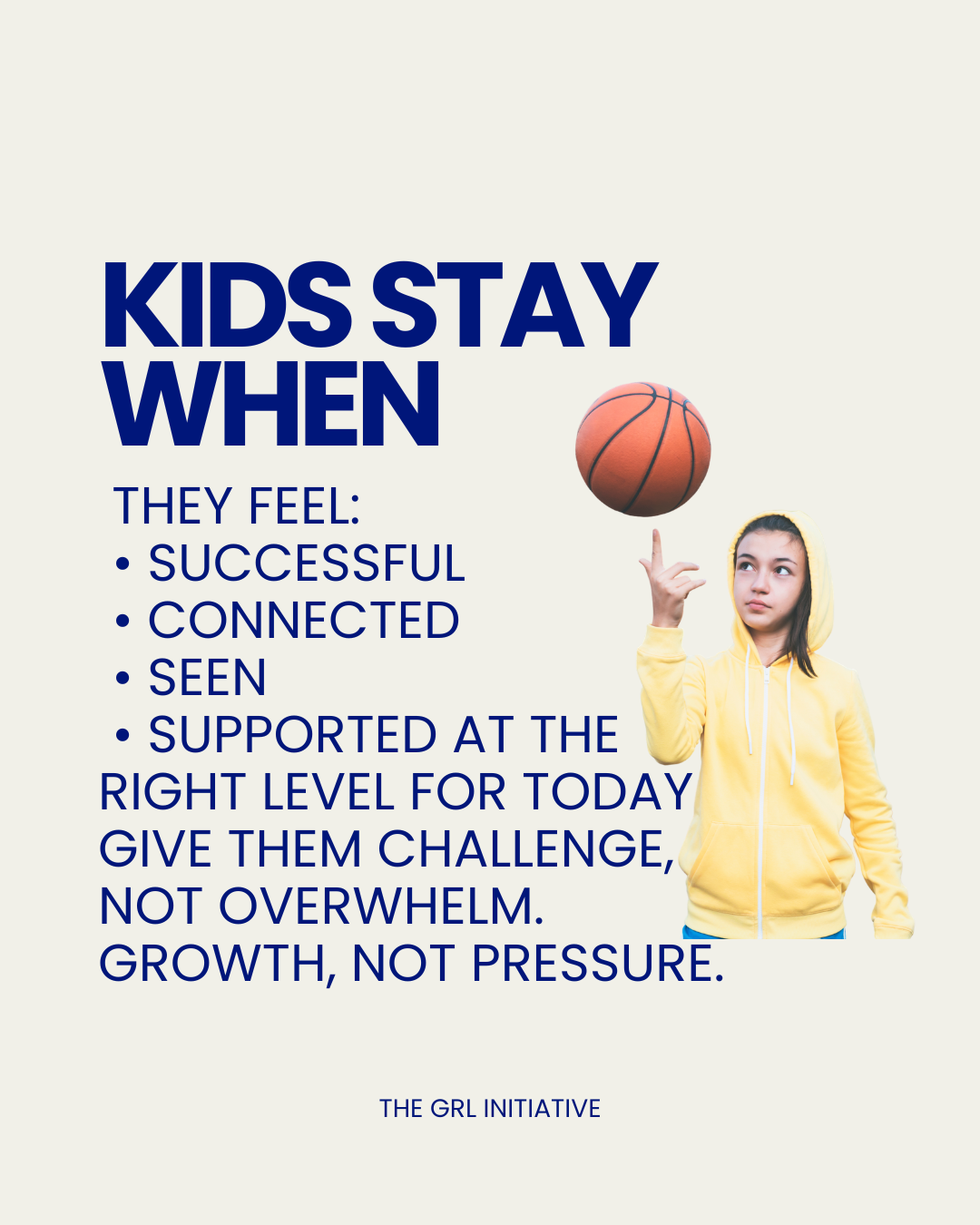
Kids thrive when they feel:
successful
connected
supported
safe
valued
developmentally matched
“Playing up” is not inherently harmful — but moving too soon, or without the right conditions, is one of the clearest pathways to burnout and dropout.
The Bottom Line
Kids don’t need the next level tomorrow.
They need the right level today.
When we protect their confidence, identity, and belonging, we’re not holding them back — we’re setting them up for a lifetime of loving sport, movement, and play.
And that’s the goal.
— The GRL Initiative
Where confidence, connection, and belonging come first.
